

Urbandale, IA · Services
Cupping in Urbandale.
Suction-based soft tissue and myofascial work, the same technique you’ve seen on elite athletes, delivered inside a cause-first plan with a Doctor of Physical Therapy.
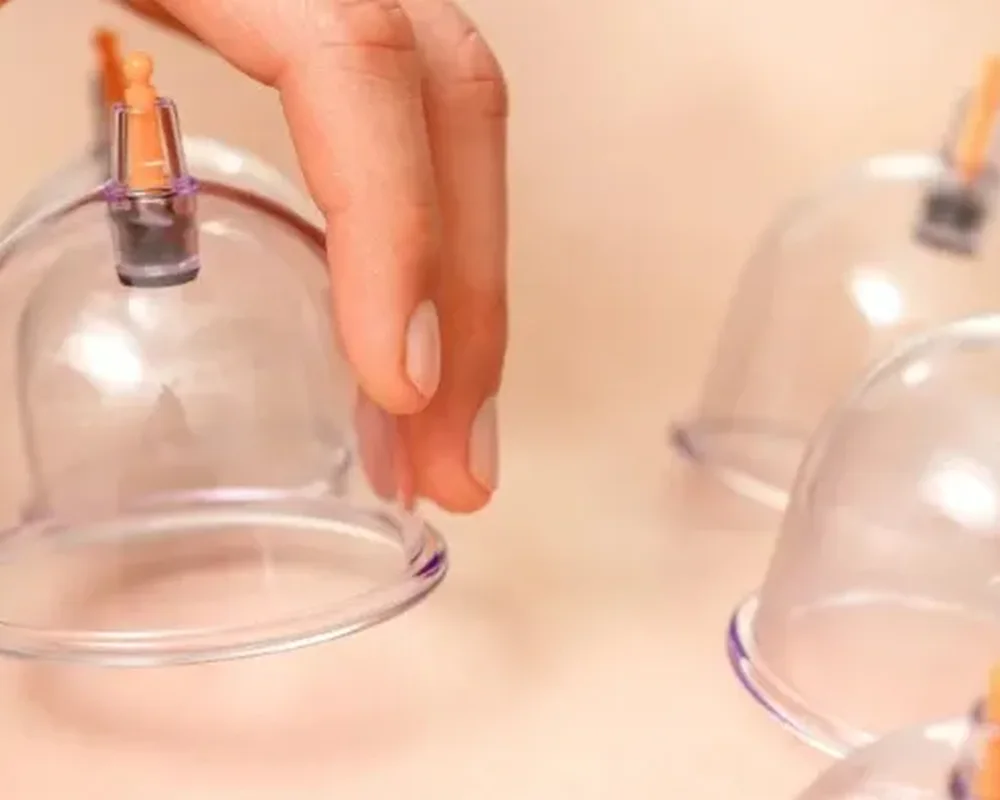
What is cupping in Urbandale?
Cupping uses a set of cups placed on the skin and drawn into gentle suction, either left in place or dragged across the tissue, to lift the skin and fascia away from the muscle underneath. That negative pressure works the opposite direction from a typical massage or manual therapy stroke, and it tends to reach restrictions that direct pressure alone doesn’t move as easily.
It’s become a familiar sight thanks to high-profile athletes who’ve worn the circular marks on national television, but here it’s used for what it actually does well: soft tissue and myofascial restriction, not a stand-alone wellness ritual. Your Doctor of Physical Therapy decides where and when it fits inside your evaluation, usually in Pain and Prime, when tight fascia is limiting the mobility work coming next.
Care still runs through the same four phases, Pain, Prime, Perform, and Prevent. Cupping earns its place early in that sequence; it doesn’t replace the strength and movement work that finishes the plan.
Calm it down.
Hands-on treatment begins at the first visit. You leave understanding what’s actually going on, and you feel a difference early.
Restore what’s stuck.
Targeted mobility work for the joints and tissue actually holding you back, dosed to your body, not a printed sheet.
Build strength you trust.
Progressive load against standards you have to clear before moving on. Confidence, here, is a training effect.
Make it stay fixed.
Testing before you’re cleared, then a keep-it-gone program sized to your real week. Then we graduate you.
What conditions does cupping treat?
Cupping tends to get called in where the fascia and soft tissue around a joint have tightened enough to limit movement or manual therapy alone. A sample of what it commonly supports:
Shoulder pain ⟶
The tight fascia across the upper back and shoulder blade that keeps the overhead reach guarded.
02Low back pain ⟶
The broad myofascial tightness across the lower back that direct pressure alone hasn’t released.
03Sports injuries ⟶
The heavy training load that’s left soft tissue restricted and slow to recover.
04Tendinitis ⟶
The tissue around a stubborn tendon that’s tightened up around the irritation.
Restricted fascia tends to spread its limitation to whatever moves near it, not stay contained to one spot. Releasing it early, inside a plan that’s treating the actual cause, tends to make the rest of the work take hold faster.
What does a cupping session look like?
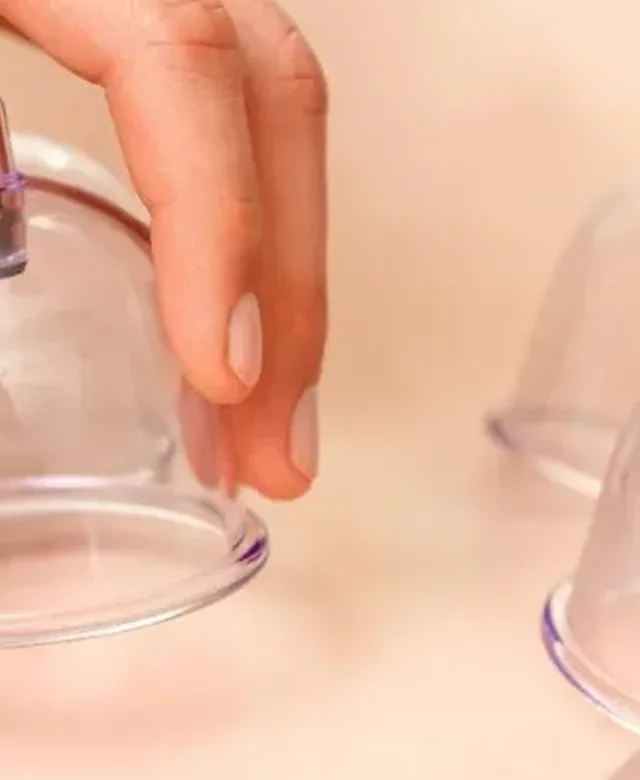
Cupping is worked into a regular visit, not booked as its own appointment. Your Doctor of Physical Therapy places the cups over the target area, using gentle suction that’s either held in place for several minutes or drawn slowly across the tissue, checking in on comfort as they go.
It’s common to see temporary circular marks afterward; they’re not bruises in the painful sense and typically fade within a few days to a week. The same visit usually continues into the mobility or strength work the tissue was too tight to tolerate before cupping opened it up.
Who this is for, and who it isn’t.
Cupping tends to fit people whose fascia or soft tissue has tightened enough to limit movement, whether from training load, a chronic ache, or an old injury that’s never fully released. It earns its place inside a plan once the evaluation confirms restricted tissue is actually part of what’s standing in the way.
The people who ask for it by name have often seen it work for someone else and want the same targeted release, not a spa treatment.
It’s not the right fit for a bleeding disorder, current blood-thinning medication your doctor should weigh in on, a skin condition or open wound near the target area, or pregnancy in certain regions; your evaluation screens for all of that before anything is scheduled.
Good fit
- Tight fascia or soft tissue limiting movement or manual therapy alone
- Part of an existing plan, once the evaluation points there
- Comfortable with temporary marks that fade over several days
- Training hard and needing tissue that recovers to keep up
Not the right fit
- A bleeding disorder or current blood-thinning medication
- A skin condition or open wound near the target area
- Pregnancy in certain regions (screened at evaluation)
It’s a tool inside the plan, never a stand-alone treatment.
“I’ve had a great experience with both Bryan and Dylan! Go Hawks!”James W. · Google review
Questions, answered plainly.
Most people feel a pulling or tight sensation rather than pain, and your Doctor of Physical Therapy adjusts suction based on what you report in the moment. The circular marks that sometimes appear afterward look more dramatic than they feel and typically fade within a few days to a week.
No. It’s become well known because high-profile athletes wear the marks in public, but the technique itself works on soft tissue and myofascial restriction for anyone whose tissue has tightened enough to limit movement, whether that’s from training, a chronic ache, or an old injury.
Here, no. Cupping is scheduled inside an existing physical therapy plan, following a cause-first evaluation that confirms it’s the right tool for what’s actually going on. It works best paired with the mobility and strength work that follows it in the same visit.
Often, yes, temporary circular marks where the cups created suction. They’re not bruises in the painful sense, they fade within a few days to a week, and your Doctor of Physical Therapy will tell you what to expect before your first session.
Start with the evaluation that decides if cupping fits.
Put it in writing.
Five short questions. A real person calls you back, usually within two business hours, with times that fit your week.
The people who end up filling this out are rarely in the worst pain of their life. They’re just done working around it, done picking the errand that doesn’t require the stairs. If that’s the stage you’re at, this is the part where you stop researching and start.
Consider it filed.
A real person will call you back, usually within two business hours, with appointment times that fit your week. Keep your phone nearby.
Can’t wait? Call (515) 207-2450 ⟶Easy to find. Easy to park.
In the neighborhood, with parking by the door. Come see the place before you commit, if you like.
The clinic · Kaizen Health and Wellness
Get Directions ⟶Opens in Google Maps