

Urbandale, IA · Services
Manual therapy in Urbandale.
Hands-on joint mobilization and soft tissue work, the connective-tissue technique used inside nearly every plan here, delivered by a Doctor of Physical Therapy, every visit.
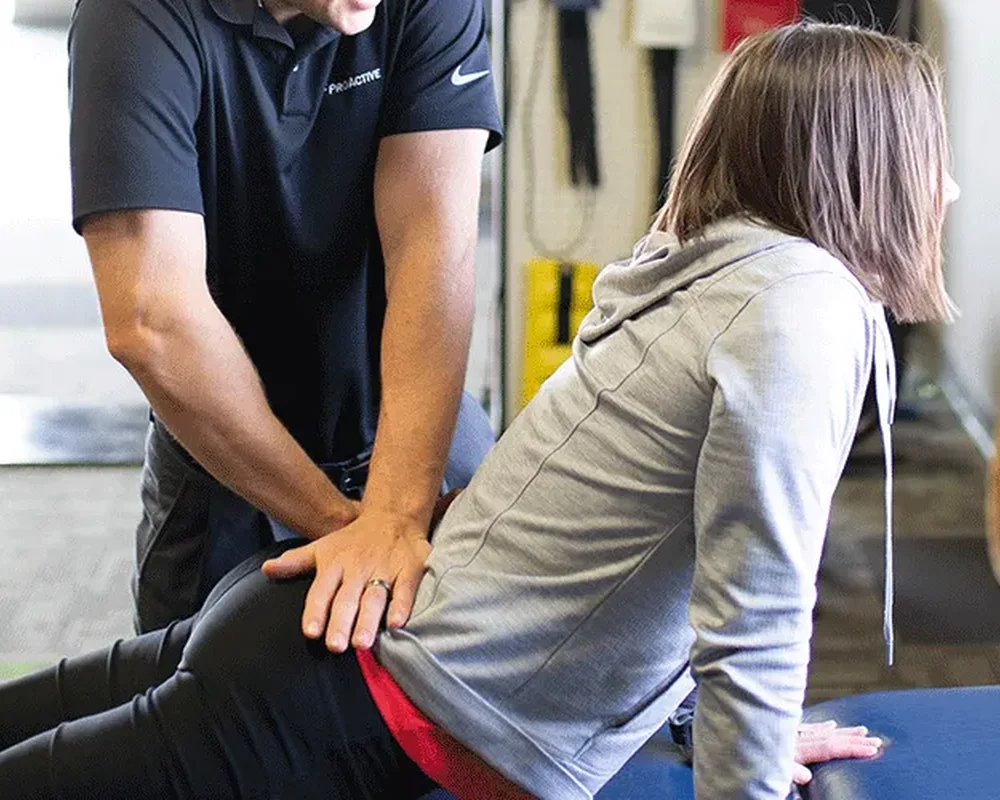
What is manual therapy in Urbandale?
Manual therapy is hands-on treatment: joint mobilization to restore motion a joint has lost, and soft tissue work to release muscle and fascia that’s tightened around it. It’s not a single named technique so much as a skill set, the hands-on foundation nearly every service on this site is built on top of.
That’s also why it isn’t a stand-alone appointment here. Manual therapy shows up inside a cause-first evaluation, applied exactly where the evaluation points, in the same visit as the movement and strength work it’s meant to unlock, not scheduled separately from the rest of your care.
It’s present across all four phases, Pain, Prime, Perform, and Prevent, though the job changes: calming an irritated joint early, restoring lost motion in Prime, maintaining mobility as load increases in Perform. It’s the connective tissue running through the whole plan.
Calm it down.
Hands-on treatment begins at the first visit. You leave understanding what’s actually going on, and you feel a difference early.
Restore what’s stuck.
Targeted mobility work for the joints and tissue actually holding you back, dosed to your body, not a printed sheet.
Build strength you trust.
Progressive load against standards you have to clear before moving on. Confidence, here, is a training effect.
Make it stay fixed.
Testing before you’re cleared, then a keep-it-gone program sized to your real week. Then we graduate you.
What conditions does manual therapy treat?
Because manual therapy underlies most of what happens in a session, it touches a wide range of conditions. A sample of what it commonly supports:
Neck pain & headaches ⟶
The stiff joints and blind-spot limitation that camp behind one eye by afternoon.
02Shoulder pain ⟶
The overhead reach and the top shelf you’ve started avoiding.
03Low back pain ⟶
The socks-sitting-down habit and the morning that takes ten minutes to loosen.
04Hip pain ⟶
The ache that’s turned crossing your legs into a negotiation.
05Elbow & wrist pain ⟶
The grip that’s turned opening a jar into a two-person job.
A joint that’s lost motion rarely gets it back on its own. Hands-on treatment tends to restore it faster than movement alone, especially early, before the rest of the plan asks that joint to work harder.
What does a manual therapy session look like?
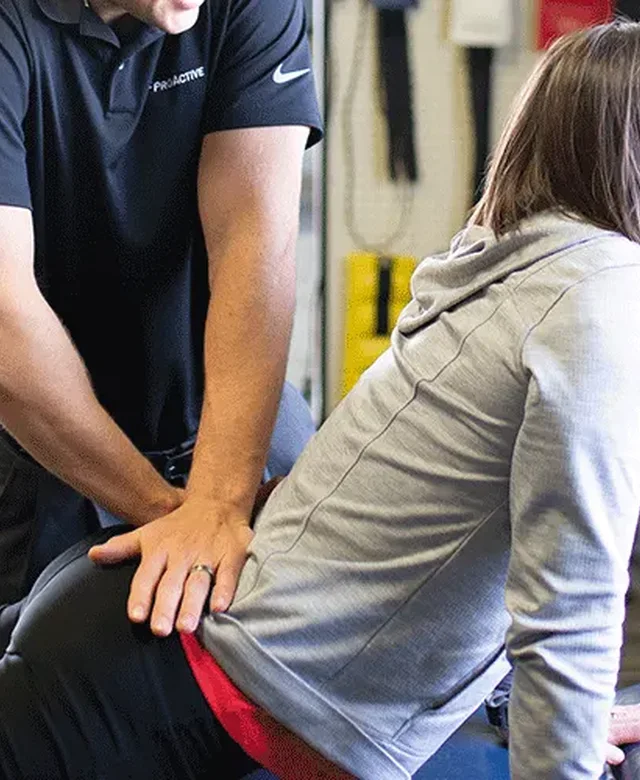
Manual therapy is worked into a regular visit, not booked as its own appointment. Your Doctor of Physical Therapy assesses the joint or tissue by feel, then applies hands-on mobilization or soft tissue work directly, checking your response as they go.
The same visit continues into movement or loading work once the joint or tissue has more motion available to it. Your doctor’s hands are on you for most of the session; this isn’t a technique you get once and move past, it’s present at nearly every visit, in some form, throughout your plan.
Who this is for, and who it isn’t.
Manual therapy fits almost anyone in an active plan here, since it’s the hands-on foundation nearly every service runs on top of: a stiff joint that needs motion restored, tight tissue that’s guarding around an injury, or simply the hands-on treatment that starts at the evaluation itself.
If you’re already working with a Doctor of Physical Therapy here, you’re almost certainly already receiving manual therapy in some form, whether or not it’s the headline of your visit.
It’s not the right first stop for a medical emergency (chest pain, sudden numbness or weakness, a fracture that needs to be set) or for a diagnosis your evaluation should follow rather than replace.
Good fit
- Already in an active plan, since manual therapy runs through nearly all of them
- A stiff joint that needs motion restored
- Tight tissue guarding around an injury
- Wanting hands-on treatment starting at the evaluation itself
Not the right first stop
- A medical emergency: chest pain, sudden numbness or weakness, a fracture that needs to be set
- A diagnosis your evaluation should follow rather than replace
It’s the connective tissue of the plan, not a separate appointment.
“Great place! Try them out! Dylan does a great job.”Jay N. · Google review
Questions, answered plainly.
No. Manual therapy is worked into your regular visits as part of the same cause-first evaluation and plan, not booked as a separate service. It’s present, in some form, at nearly every visit, whichever service brought you in the door.
Manual therapy targets a specific clinical finding, a joint that’s lost motion, tissue that’s guarding around an injury, based on what your evaluation found, and it’s delivered by a Doctor of Physical Therapy as part of a plan with an endpoint. It’s a clinical technique, not a relaxation service.
Some techniques produce brief discomfort, especially on a joint that’s been stiff for a while, but your Doctor of Physical Therapy checks in throughout and adjusts pressure and technique based on what you report. Most people feel looser, not more sore, by the end of the session.
It’s not scheduled as a separate count, it runs through your entire plan. Manual therapy shows up at nearly every visit across all four phases, Pain, Prime, Perform, and Prevent, in whatever form the evaluation and your progress call for that day.
Start with the hands-on evaluation.
Put it in writing.
Five short questions. A real person calls you back, usually within two business hours, with times that fit your week.
The people who end up filling this out are rarely in the worst pain of their life. They’re just done working around it, done picking the errand that doesn’t require the stairs. If that’s the stage you’re at, this is the part where you stop researching and start.
Consider it filed.
A real person will call you back, usually within two business hours, with appointment times that fit your week. Keep your phone nearby.
Can’t wait? Call (515) 207-2450 ⟶Easy to find. Easy to park.
In the neighborhood, with parking by the door. Come see the place before you commit, if you like.
The clinic · Kaizen Health and Wellness
Get Directions ⟶Opens in Google Maps