

Urbandale, IA · What we treat
Pre & post-surgical rehabilitation in Urbandale.
Surgery is one part of the recovery, not the whole thing: a cause-first evaluation before your operation builds strength the post-op phases can draw on, and the same evaluation after your operation turns your surgeon’s protocol into a plan with an endpoint, so healing on paper turns into healing you can actually feel.
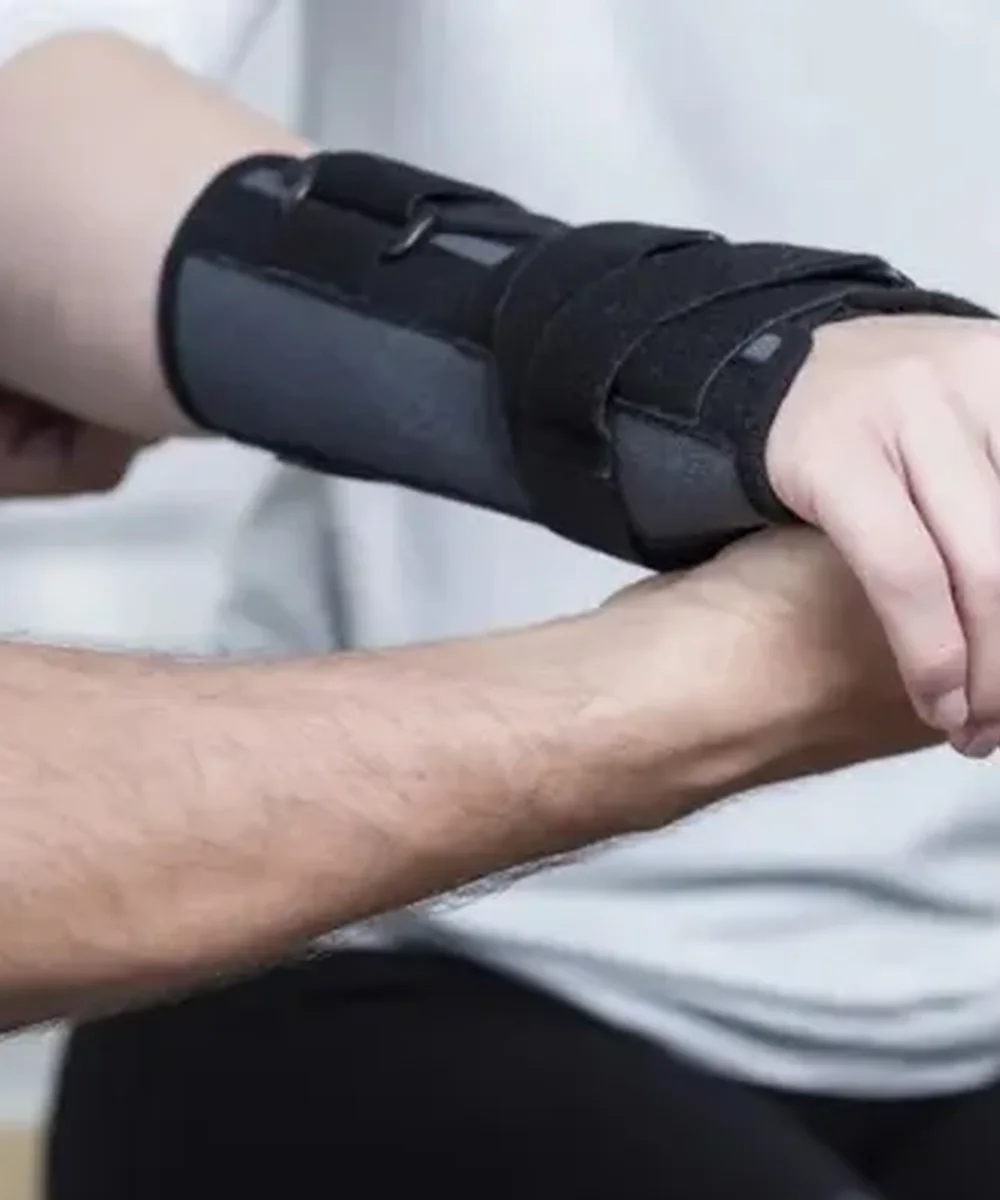
You’ve probably said one of these.
Nobody walks in describing a post-surgical protocol. They describe days like these. Tap one that sounds like your week.
-
UsuallyA missed prehab window, the weeks before surgery when building strength gives the post-op recovery a stronger starting point.
See how prehab builds that starting point ⟶ -
OftenEarly stiffness and guarding settling in during the first weeks of healing, the exact window hands-on range-of-motion work is built to address.
See how the plan restores that motion ⟶ -
UsuallyA recovery that stalled without a structured plan, not a surgery that failed. A named endpoint and testing at every phase is what keeps that from happening here.
See how the four-phase plan prevents stalling ⟶
- “My surgeon said physical therapy after, but nobody explained what it actually involves.”
- “I’m cleared to walk without the brace, but I still favor it without meaning to.”
- “It’s healed on the outside. It doesn’t feel healed when I try to use it like before.”
If two or three of those sound like your surgery, before or after, you’re not behind schedule. You’re describing a pattern we see often, and one an evaluation is built to explain.
Why does surgery need a plan on both sides of the operation?
There’s rarely one single reason a surgical recovery stalls, which is exactly why guessing doesn’t work. What we usually find, alone or in combination:
- Preoperative deconditioning. Strength lost in the weeks of waiting for a surgery date, since pain often limits activity well before the procedure itself.
- Post-surgical stiffness. Scar tissue and guarding that sets in fast during the first weeks of healing if range of motion isn’t addressed early.
- Swelling and pain limiting movement. A natural part of healing that, left unmanaged, quietly teaches the body to avoid using the area at all.
- Muscle inhibition around the surgical site. Nearby muscles that “forget” how to fire fully after surgery, independent of how well the tissue itself has healed.
- Compensation patterns. Weeks of protecting the surgical side that quietly load the opposite limb or an adjacent joint into a second problem.
None of these are things a surgeon’s follow-up visit is built to catch on its own, and most respond well to early, protocol-matched treatment. That’s what the evaluation sorts out.
How do we treat pre and post-surgical rehabilitation in Urbandale?
If your surgery is already scheduled, prehab starts now: building strength and range before the procedure gives the post-op phases a stronger starting point. Once you’re through surgery, a cause-first evaluation checks your motion, strength, and swelling against your surgeon’s specific protocol, and care moves through four named phases.
The plan’s endpoint is named at your evaluation, matched to your procedure, and reviewed with you every phase, because the goal is getting you back to your life, not just past your follow-up appointment.
Manage the healing.
Controlling post-surgical swelling and pain within your surgeon’s protocol, starting as early as it’s cleared.
Restore the motion.
Hands-on and guided range-of-motion work to prevent the stiffness that sets in fastest during the early weeks.
Rebuild real strength.
Progressive loading against standards you clear before moving on, often paired with blood flow restriction to build strength earlier than heavy loading is safe.
Return to your life.
Testing before you’re cleared, then a home program sized to your job, your house, and the activities surgery was meant to give back.
What does getting better look like?
People who end up in our clinic for post-surgical rehab are rarely behind because they skipped anything. More often, it’s a slower story: cleared at a follow-up visit, told to “get moving,” and quietly aware the joint doesn’t move the way it did before the operation. If that’s closer to your version, you’re the typical patient here, not an outlier.
Most patients notice a difference within the first few visits, since testing and treatment both start at the evaluation itself, matched to what your surgeon’s protocol allows at that stage. Progress tends to show up in ordinary places first: bending a joint through more of its range each week, standing up from a chair without pushing off with both arms, walking the length of a hallway without stopping. Left to recover on its own, a surgical joint doesn’t always find its way back to full function; stiffness and compensation tend to settle in permanently the longer they go unaddressed.
An evaluation turns your surgeon’s protocol into a specific plan, reviewed with you at every phase.
Which services treat pre and post-surgical rehabilitation?
Physical Therapy
The foundation of treatment: the cause-first evaluation and the four-phase plan that runs the whole recovery.
02Orthopedic Therapy
Manages the joint mechanics, swelling, and protocol-matched loading specific to your surgical procedure.
03Blood Flow Restriction
Builds strength at lower joint loads earlier in recovery, before heavier lifting is cleared by your surgeon.
“Dylan has done very well with my physical therapy. I’m recovering from recent surgeries and his assistance has made a real difference in my recovery.”Lynn R. · Google review
Questions, answered plainly.
The things people ask on the phone about surgery, before and after, written down.
It’s worth asking about even with a surgery date already set. Going in with more strength and range of motion, often called prehab, tends to give the post-op phases a stronger starting point, since the muscles around the joint don’t have to be rebuilt from as far behind.
Often within the first one to two weeks, once your surgeon clears gentle movement, and sometimes the same week. Early motion is one of the strongest predictors of a smooth recovery, well before you’d consider yourself ready for exercise.
That’s common, and it’s worth asking about directly at your post-op follow-up. In many states you can also start an evaluation without a referral, and we’ll coordinate with your surgeon’s office either way so your plan matches their protocol.
The evaluation accounts for your surgeon’s specific protocol, precautions, and healing timeline alongside the usual strength and motion testing. Nothing gets loaded faster than your surgery allows, and every phase is checked against what your procedure actually requires.
Start with a cause-first evaluation, before or after your surgery.
Put it in writing.
Five short questions. A real person calls you back, usually within two business hours, with times that fit your week.
The people who end up filling this out are rarely in the worst pain of their life. They’re just done working around it, done picking the errand that doesn’t require the stairs. If that’s the stage you’re at, this is the part where you stop researching and start.
Consider it filed.
A real person will call you back, usually within two business hours, with appointment times that fit your week. Keep your phone nearby.
Can’t wait? Call (515) 207-2450 ⟶Easy to find. Easy to park.
In the neighborhood, with parking by the door. Come see the place before you commit, if you like.
The clinic · Kaizen Health and Wellness
Get Directions ⟶Opens in Google Maps